Author: Cyrus Munyao

  • Kenyan Shilling Holds Firm Against Major Currencies as CBK Rates Show Modest Movements

    The Kenyan shilling remained relatively stable against major international currencies at the end of the trading week, according to the latest daily exchange rates published by the Central Bank of Kenya (CBK).

    The CBK’s indicative rates for September 25, 2026 put the U.S. dollar at KSh129.62, while the British pound traded at KSh171.44 and the euro at KSh147.47.

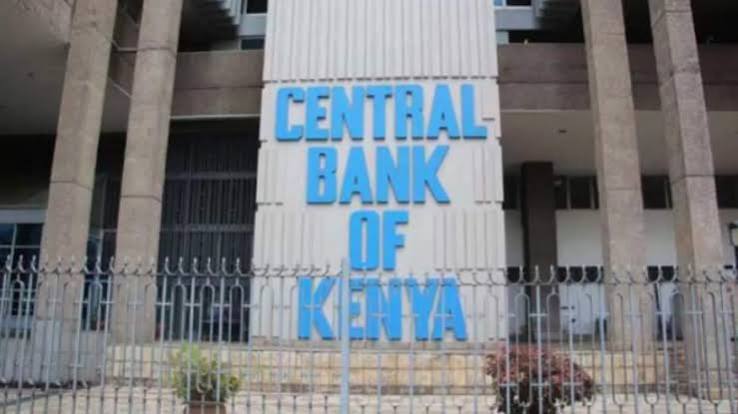
    photo: courtesy

    The dollar rate was slightly higher than the KSh129.46 recorded by the CBK on September 22, indicating a small movement in the shilling’s value against the U.S. currency over the period. The CBK’s published rates are based on weighted-average spot transactions in Kenya’s interbank foreign-exchange market.

    The central bank emphasizes that it does not set the exchange rate. Instead, the shilling’s value is determined by foreign-exchange market conditions, including supply and demand. Commercial banks and foreign-exchange bureaus subsequently set their own customer rates.

    The latest figures show the pound at KSh171.44, compared with KSh173.10 on September 22, while the euro stood at KSh147.47, down from KSh148.46 over the same period.

    These movements matter to Kenyan businesses that import goods, pay overseas suppliers, receive foreign-currency revenues or have international financing obligations.

    For importers, a weaker shilling can increase the Kenya-shilling cost of foreign purchases. Exporters and businesses receiving payments in foreign currencies can experience the opposite effect when converting those earnings into shillings.

    The CBK also publishes indicative rates for currencies used extensively in East African trade. Its September 22 data put the Kenyan shilling at approximately 30.39 Ugandan shillings and 20.39 Tanzanian shillings, while the rate against the Rwandan franc was 11.37.

    For businesses operating across East Africa, these rates provide a useful reference when preparing budgets, pricing cross-border transactions and assessing the shilling value of regional revenues and expenses.

    The latest CBK figures underline the importance of monitoring foreign-exchange movements as Kenyan companies plan purchases and payments in international currencies.

    Because the CBK rates are indicative market reference rates rather than mandatory retail rates, the amount a customer actually receives when buying or selling foreign currency may differ depending on the bank, forex bureau, transaction size and applicable margins.

    photo:courtesy
  • AI Rally Pushes Markets Higher as Oil and Bond Yields Keep Investors on Edge

    Global financial markets ended the week with a renewed appetite for technology stocks, but the rally is being tested by elevated oil prices and rising government bond yields that threaten to keep inflation and borrowing costs high.

    Wall Street closed higher on Friday, with the S&P 500 gaining 0.51%, the Nasdaq 0.48% and the Dow Jones Industrial Average 0.93%. Technology shares led the advance, with Microsoft rising 3.7% after unveiling new artificial-intelligence capabilities for its Copilot platform. 

    https://images.openai.com/static-rsc-4/btwLbHhDTIecDnhu29ko3zRzZAk4ih7N4h7bpNU8wqNnUm9w1t2ApE3UazxmY41LsBL3hqYOrPnVuwE1Kme1YiXkFI4eTEbOWd41o6lvjnnsHAm_sH3Pqsvp7q6RFcxYCLKCmwPAm-CwE18sZF7spTS1Sh3n4Wc-qCLfWU-stMt4MGQn2aCWSo9FR69bE2JT?purpose=fullsize
    https://images.openai.com/static-rsc-4/dXMqfHCtdGd3JXqb6AXka-ugMyN30uS3kTlN3wauy3OyuLiWSsunb5uEXg8sc4Kyry5WE1GJwAAE54VlVhr52Mi4h46fp5T6hDrKr9528SB-vKFKj0AdzPveVTj-aMrgyjMCuEWbMia5HG8gBLe1hcagSqOmQKz1IM78kFKrf3yaPMeaqVMo78fDiqAfGdyy?purpose=fullsize
    https://images.openai.com/static-rsc-4/hyqwims0MjTCDC5fTkVTvleOFTfVUGOaCPyLiIkOMLh7SyBZ-z1zwroR38heAb_iqWPp1ApF171pUYGeV9vQTIcLISJSA3O9F-Ial2QT0-uC7vm4vEerXn47Y23gLpYIoWCec5p2YpKQkv1vwrmmKyzuVFVFDvrKZ57I4zQto5pq1t5qpvuwsg1-LxczWClb?purpose=fullsize

    AI remains the market’s main growth story

    Investor enthusiasm for artificial intelligence has continued to support technology valuations despite growing questions about the scale of spending required to build AI infrastructure.

    Advanced Micro Devices became the latest U.S. chipmaker to surpass a $1 trillion market valuation earlier this week, as investors continued betting on demand for AI computing. Reuters reported that AMD’s shares had nearly tripled during 2026 by September 21.

    The Nasdaq has also recovered from a sharp summer decline. On September 22, the index briefly reached a record intraday level of 27,212.68, helped by falling oil prices and renewed confidence in technology companies.

    Oil creates a counterweight

    The enthusiasm around AI is occurring alongside a very different story in energy markets.

    Oil prices remain above $100 a barrel amid disruption and uncertainty surrounding Middle Eastern supply routes. On September 20, Brent crude fell 3.4% to $100.34, while WTI fell 4.51% to $95.78 as markets responded to hopes for renewed U.S.-Iran diplomacy and signs of recovering Saudi shipments.

    Iraq’s state oil marketer was also reported on Saturday to be offering last-minute crude cargoes as extremely high shipping costs complicate purchases from the Persian Gulf. 

    Bond yields add another challenge

    Higher energy prices are feeding concerns about inflation, while government borrowing costs have also climbed.

    Reuters reported on Friday that the U.S. 10-year Treasury yield was around 5.17%, after reaching roughly 5.22% during the week. Japan’s 10-year government bond yield touched 3.115%, its highest level since 1996.

    Higher yields matter for businesses because they increase financing costs and can make future corporate earnings less attractive relative to government bonds. They can also put pressure on highly valued growth companies whose valuations depend heavily on expectations of future profits.

    What businesses are watching next

    The final week of September brings a new set of economic indicators that could influence expectations for interest rates. Reuters identifies U.S. employment data and U.S. and euro-zone inflation figures as key events for markets heading into the fourth quarter.

    For companies and investors, the central tension is becoming clearer: AI investment is supporting equity markets, while energy costs and higher borrowing rates are increasing pressure on the wider economy.

    That combination is likely to keep corporate investment, technology spending, energy costs and interest rates at the center of business-market discussions as the fourth quarter begins.

    Sources: Reuters reporting published September 21–25, 2026; Bloomberg reporting carried by Rigzone on September 26, 2026. 

  • Quickmart Plans NSE Listing as Kenyan Retailer Opens Ownership to Public

    NAIROBI, Kenya — September 26, 2026

    Kenyan supermarket chain Quickmart is preparing to list on the Main Investment Market Segment of the Nairobi Securities Exchange, potentially giving members of the public an opportunity to own a stake in one of the country’s expanding retail businesses.

    The retailer plans to offer 2 billion ordinary shares, representing 50% of the share capital of Sokoni Retail Kenya Limited, its sole shareholder. The transaction is subject to regulatory approval and is expected to launch around September 30. The owners have also indicated they could sell an additional 7.5% if demand is strong.

    Quickmart currently operates more than 70 stores across Kenya. The company says its annual sales exceed KSh50 billion, while its June 2026 financial position showed only KSh6.8 million in borrowings and approximately KSh4 billion owed to suppliers under its supplier-financing model.

    The planned transaction would represent a significant development for Kenya’s capital markets and retail sector, while providing existing shareholders with a route to partially realise their investment.

    Photo: Quickmart supermarket .
    Sources: Daily Nation, Business Daily, Quickmart.

  • Engineers India wins $450 million contract for Dangote’s planned Kenya refinery

    NAIROBI, September 23, 2026

     India’s state-owned Engineers India Limited has secured a contract worth more than $450 million to provide project-management and engineering services for Dangote Group’s planned oil refinery and petrochemical complex in Lamu, Kenya.

    The contract is a major step in the development of the proposed 700,000-barrel-per-day facility, which Dangote plans to build in the Lamu Special Economic Zone on Kenya’s Indian Ocean coast.

    Engineers India will provide project-management consultancy as well as engineering, procurement and construction-management services. Its responsibilities will include coordinating project execution and monitoring construction schedules, costs, quality and safety.

    The contract comes ahead of a planned groundbreaking ceremony at the project site on September 30.

    The proposed refinery is expected to require an investment of roughly $15 billion to $17 billion, making it one of the largest proposed industrial projects in East Africa.

    Dangote’s investment is intended to create a major refining and petrochemical hub serving Kenya and other markets in the region. The facility’s location near the Port of Lamu could also support the import of crude oil and the export of refined petroleum products.

    The project nevertheless faces several challenges.

    One of the key issues is securing a reliable supply of crude oil. Kenya does not currently produce crude on a commercial scale, meaning the refinery would need to depend on imports or supplies from other oil-producing countries in the region.

    Infrastructure and financing will also be important to the project’s development because of its scale and the supporting facilities required.

    Engineers India’s involvement builds on its previous relationship with Dangote. The Indian company was also involved in project-management and engineering work for Dangote’s refinery in Nigeria.

    If construction proceeds as planned, the Lamu facility would significantly expand Kenya’s petroleum-processing capacity and could alter fuel-supply patterns across East Africa.

    The next major milestone is expected to be the September 30 groundbreaking ceremony, which would formally move the project from planning toward construction.

  • Eurozone business activity accelerates despite rising energy costs

    LONDON, September,23, 2026

     Business activity across the eurozone accelerated unexpectedly in September, reaching its strongest level in more than three years despite higher energy costs and continuing geopolitical uncertainty.

    The S&P Global flash Eurozone Composite PMI rose to 53.1 from 52.0 in August, marking its strongest reading since April 2023. Economists surveyed by Reuters had expected the index to decline to 51.7.

    Growth was supported by both manufacturing and services. The services PMI climbed to 53.0 from 51.6, while manufacturing remained in expansion territory at 52.7.

    New orders also increased at their fastest pace in more than four years. Stronger export demand contributed to the improvement, giving businesses across the currency bloc a boost after a prolonged period of weak economic growth.

    Germany, Europe’s largest economy, recorded solid expansion, while France also experienced stronger business activity. France’s services sector helped push overall activity to its fastest rate in more than two years.

    The stronger performance comes as European companies contend with increased energy and input costs. Rising energy prices are putting pressure on manufacturers and other energy-intensive businesses, while higher operating costs could eventually feed into consumer prices.

    Companies nevertheless continued to hire workers as demand increased.

    The data present a mixed picture for the European economy. Stronger orders and business activity point to improving demand, while rising costs could make it more difficult for companies to protect profit margins.

    The figures will also be closely watched by the European Central Bank as it assesses economic growth and inflationary pressures.

    For businesses across the eurozone, the September survey signals stronger activity but continued exposure to energy prices, geopolitical developments and borrowing costs.

    photo courtesy

  • US business activity hits five-year high as new orders surge

    WASHINGTON, Sept. 23, 2026

    Business activity in the United States accelerated to its strongest pace in more than five years in September, as a surge in new orders lifted both the manufacturing and services sectors.

    The S&P Global flash Composite Purchasing Managers’ Index rose to 58.4 this month from 56.0 in August, reaching its highest level since July 2021. A reading above 50 indicates expansion in private-sector activity.

    The increase was stronger than economists had anticipated and was supported by a sharp rise in new orders. Manufacturing output also strengthened, while employment in factories increased at its fastest pace since February 2021, according to the survey.

    The stronger activity, however, was accompanied by rising costs and supply constraints. Businesses reported longer delivery times and growing backlogs, while input prices increased sharply.

    photo courtesy.

    S&P Global said the latest survey was consistent with economic growth of around 5% on an annualized basis, although the PMI is a business survey and is not an official measure of gross domestic product.

    The combination of stronger demand and higher prices could complicate the outlook for businesses and monetary policymakers. Companies are facing higher costs for inputs and services at a time when demand remains strong.

    Financial markets reacted to the data with caution. Reuters reported that the yield on the benchmark 10-year U.S. Treasury note rose to its highest level since 2007, while major U.S. stock indexes declined.

    The September figures provide evidence that the U.S. private sector continues to expand rapidly, but they also highlight the pressure businesses face from rising costs and constrained supply.

    photos courtesy.

  • 𝐊𝐞𝐧𝐲𝐚’𝐬 𝐁𝐚𝐧𝐤𝐢𝐧𝐠 𝐒𝐞𝐜𝐭𝐨𝐫 𝐒𝐭𝐫𝐞𝐧𝐠𝐭𝐡𝐞𝐧𝐬 𝐚𝐬 𝐃𝐞𝐩𝐨𝐬𝐢𝐭𝐬, 𝐏𝐫𝐨𝐟𝐢𝐭𝐬 𝐑𝐢𝐬𝐞

    NAIROBI — Kenya’s banking sector strengthened its financial position in 2025, with higher customer deposits, stronger profitability and improved asset quality, according to the Central Bank of Kenya’s Bank Supervision Annual Report 2025.

    The report shows that total net assets in the banking sector increased by 10.3 per cent, rising from KSh7.57 trillion in December 2024 to KSh8.35 trillion at the end of 2025.

    Customer deposits also recorded strong growth, increasing by 11.6 per cent to KSh6.12 trillion, up from KSh5.48 trillion a year earlier. CBK attributed the increase largely to deposit mobilisation initiatives by commercial banks.

    The sector’s profitability improved significantly during the year. Profit before tax rose by KSh46 billion, or 17.7 per cent, to KSh306.3 billion, compared with KSh260.3 billion in December 2024.

    CBK said the increase in profitability was mainly driven by a larger reduction in total expenses, which fell by KSh67.4 billion during the year.

    The banking sector also maintained strong capital and liquidity buffers. The total capital adequacy ratio stood at 20.7 per cent in December 2025, comfortably above the regulatory minimum of 14.5 per cent. The average liquidity ratio rose to 59.3 per cent, compared with 55.8 per cent in December 2024 and well above the statutory minimum of 20 per cent.

    The report further points to an improvement in asset quality. Gross non-performing loans declined marginally to KSh696.9 billion from KSh697.3 billion, while the ratio of gross non-performing loans to gross loans fell from 17.1 per cent to 16.0 per cent. CBK attributed the improvement to repayments, recoveries and increased new lending.

  • 𝐊𝐞𝐧𝐲𝐚 𝐒𝐡𝐢𝐥𝐥𝐢𝐧𝐠 𝐑𝐞𝐦𝐚𝐢𝐧𝐬 𝐒𝐭𝐚𝐛𝐥𝐞 𝐚𝐬 𝐑𝐞𝐦𝐢𝐭𝐭𝐚𝐧𝐜𝐞𝐬 𝐑𝐢𝐬𝐞 𝟔 𝐏𝐞𝐫𝐜𝐞𝐧𝐭𝐁𝐲 𝐂𝐲𝐫𝐮𝐬 𝐌𝐮𝐧𝐲𝐚𝐨

    NAIROBI, September 18, 2026

    The Kenya Shilling remained stable against major international and regional currencies during the week ending September 17, even as remittance inflows increased by six percent in August 2026.According to the Central Bank of Kenya’s weekly bulletin, the Shilling exchanged at KSh129.62 per US dollar on September 17, compared with KSh129.45 on September 10.The CBK said foreign exchange reserves remained adequate at 10.088 billion US dollars, equivalent to 6.1 months of import cover, exceeding the statutory requirement of at least four months.Meanwhile, remittance inflows increased to 451.8 million US dollars in August 2026, up from 426.1 million dollars recorded in August 2025, representing a 6 percent increase.However, cumulative remittances for the 12 months to August 2026 declined by 1.3 percent to 5.013 billion dollars, compared with 5.079 billion dollars recorded during a similar period in 2025.In the government securities market, the Treasury bill auction held on September 17 attracted bids worth 42.7 billion shillings against an advertised amount of 28 billion shillings, representing a performance rate of 152.6 percent.The CBK also reported that a Treasury bond auction held on September 16 received bids totaling 81.4 billion shillings against an advertised 60 billion shillings, representing a performance rate of 135.7 percent.The Nairobi Securities Exchange, however, recorded declines during the week. The NSE All Share Index fell by 4.96 percent, while the NSE 25 and NSE 20 indices declined by 5.85 percent and 6.47 percent, respectively.The bulletin further reported that inflationary pressures remained a concern globally. United Kingdom headline inflation rose to 3.1 percent in August 2026, while the US Federal Reserve raised its federal funds target range by 25 basis points to between 3.75 and 4 percent.International commodity markets also recorded mixed movements, with Murban crude oil prices declining to 94.70 US dollars per barrel, while gold prices increased to 4,340.09 dollars per ounce.

    Source: Central Bank of Kenya Weekly Bulletin, September 18, 2026.

  • 𝐊𝐞𝐧𝐲𝐚 𝐒𝐡𝐢𝐥𝐥𝐢𝐧𝐠 𝐇𝐨𝐥𝐝𝐬 𝐒𝐭𝐞𝐚𝐝𝐲 𝐀𝐠𝐚𝐢𝐧𝐬𝐭 𝐌𝐚𝐣𝐨𝐫 𝐂𝐮𝐫𝐫𝐞𝐧𝐜𝐢𝐞𝐬𝐁𝐲 𝐂𝐲𝐫𝐮𝐬 𝐌𝐮𝐧𝐲𝐚𝐨

    NAIROBI, September 18, 2026

    The Kenya Shilling remained relatively stable against major international and regional currencies, according to the latest exchange rates released by the Central Bank of Kenya (CBK).The CBK’s daily exchange rates for September 18 show that the US dollar was trading at KSh129.61, while the Sterling Pound stood at KSh173.30.The Euro was quoted at KSh148.90, while 100 Japanese Yen exchanged at KSh83.25.On the regional market, the Kenya Shilling exchanged at KSh30.36 against the Ugandan Shilling, KSh20.40 against the Tanzanian Shilling, and KSh11.36 against the Rwandan Franc.The South African Rand was quoted at KSh7.97.The exchange rates provide an indication of the value of the Kenya Shilling against selected international and regional currencies and are used as a reference by businesses, financial institutions and other market participants.The latest figures come as the CBK continues to monitor developments in the foreign exchange market and the wider economy.Source: Central Bank of Kenya