Author: Visaho Delson

  • Wicknell Chivayo Biography

    By Visaho Delson 30th September,2026, Nairobi

    Wicknell Chivayo with his wife Lucy Muteke

    Wicknell Munodaani Chivayo, known to many as Sir Wicknell, was born on 22 November 1982 in Chivhu, Zimbabwe, and raised in the Gandami area after losing his father Isaac Mathias Chivayo in a car accident when he was just 10. He went to Dudley Hall Primary and Churchill Boys High in Harare, but left school early because of financial pressure and by 15 he was already working as a wages clerk at a bus company in the city.

    He built his name through Intratrek Zimbabwe, the company he founded and ran as Managing Director. Intratrek was into energy, telecoms and infrastructure, and it shot into the spotlight in 2015 when it won the US$200 million tender for the 100MW Gwanda Solar Project. The company received a US$5 million advance from Zimbabwe Power Company but the project stalled for years, leading to fraud and money laundering charges that followed him to court until his acquittal in 2024. Despite that, he kept pushing for big deals.

    Chivayo was never just a businessman he was a showman. He became famous for his flamboyant lifestyle, his fleet of Rolls-Royces, Maybachs, private jets, and for giving away luxury cars and cash to musicians, pastors and ordinary people. He was openly close to President Emmerson Mnangagwa and ZANU-PF, and from 2025 he started expanding beyond Zimbabwe into Kenya and Tanzania, where he was linked to a US$2.5 billion transmission deal with China’s Chint Group and the JKIA expansion talks, and was often photographed with Presidents William Ruto and Samia Suluhu Hassan.

    In his private life he married Sonja Madzikanda in 2017 and separated in 2024, then married Lucy Muteke in March 2025. He had five children.

    His life was cut short on 30 September 2026 when the helicopter he was travelling in with his wife Lucy crashed in Marondera Rural, Mashonaland East. He was 43.
  • Morocco Appoints First Female Prime Minister After General Elections September 29, 2026

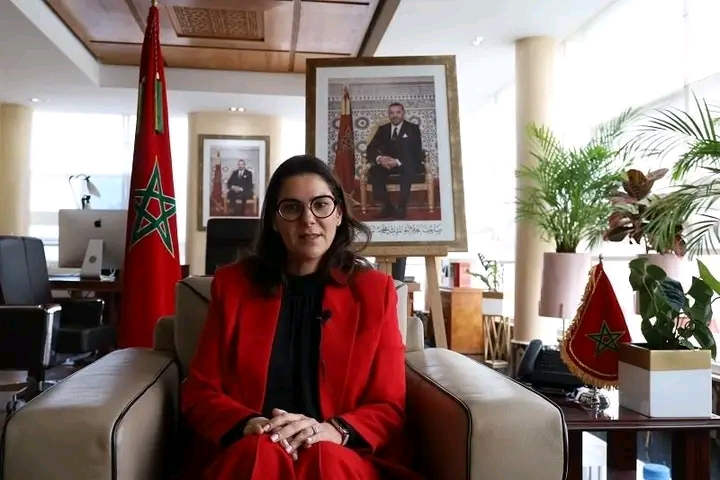
    King Mohammed VI of Morocco has appointed Fatima Ezzahra El Mansouri as the country’s first woman Prime Minister following her party’s strong performance in the recent general elections. The historic appointment makes her only the second woman to lead a government in the Arab world and marks a significant milestone for gender representation in North African politics.

    El Mansouri’s selection comes after her party emerged among the top performers in the September 23 elections. Political analysts say the decision reflects both the evolving political landscape in Morocco and the growing influence of women in public leadership roles across the region.
    The new Prime Minister is expected to focus on economic recovery, social reforms, and maintaining political stability.

    Her appointment has drawn praise from regional observers who view it as a positive step toward greater inclusion, while also placing high expectations on her ability to deliver tangible results for ordinary Moroccans.
    As she prepares to form her government, attention will turn to the composition of the new cabinet and the policy priorities that will define her administration.

    The development is being closely watched across Africa and the Middle East as a potential signal of changing attitudes toward women’s leadership at the highest levels of government.

  • Kenya Power Announces Scheduled Outages Across 11 Counties Including Nairobi September 29, 2026

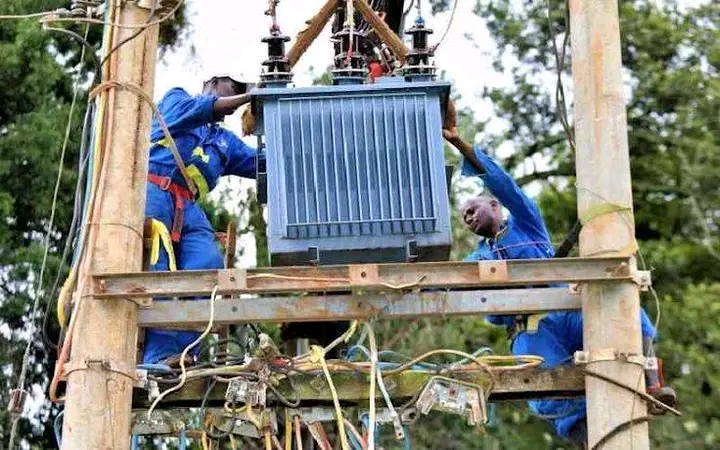
    Kenya Power has announced planned electricity maintenance that will affect parts of 11 counties, including Nairobi, on Tuesday, September 29. The utility company said the interruptions are necessary to allow technical teams to carry out essential upgrades and repairs aimed at improving the reliability of the power supply.

    Areas in Nairobi such as parts of Mbaazi Avenue, Hatheru Road, Riara Road, and surrounding neighbourhoods are among those listed for outages lasting several hours.

    Other affected counties include Kiambu, Nyeri, and Kisumu, with specific zones and time slots detailed in the official notice released on Monday evening.
    Kenya Power advised residents and businesses to make alternative arrangements, especially those relying on electricity for work, medical equipment, or cold storage.

    The company said the maintenance works are part of ongoing efforts to strengthen the national grid and reduce unplanned blackouts in the long term.
    Customers have been encouraged to follow official updates through Kenya Power’s communication channels for any changes to the schedule.

    The utility reiterated its commitment to restoring supply promptly once the maintenance activities are completed in each affected area.

  • Lawyers Withdraw from Representing Suspects in Dr Victoria Mutiso Murder Case September 29, 2026

    Three lawyers representing key suspects in the murder of prominent clinical psychologist Dr Victoria Mutiso dramatically withdrew from the case on Tuesday following disagreements with their clients. The development came during court proceedings at the Milimani Law Courts, where the suspects, including Rose Mbithe Mulwa and her two children, are facing murder charges.

    Dr Mutiso was killed on July 29 in Nairobi after her taxi was ambushed by armed attackers at a road junction. The attack, involving both a motorcycle and a vehicle, shocked the country and led to a high-profile investigation that resulted in the arrest of several suspects, including two police officers.

    Prosecutors have opposed bail for the accused, arguing that their release could compromise ongoing investigations and that some alleged accomplices remain at large. The State maintains that the evidence against the suspects is strong and that the case should proceed without delay.

    The sudden withdrawal of the defence lawyers has introduced fresh uncertainty into the proceedings. The court is expected to give directions on the appointment of new counsel as the high-profile murder case continues to attract significant public attention.

  • Deputy President Kindiki Orders Fresh Nationwide Inspection of Alcohol Manufacturers September 29, 2026

    Deputy President Kithure Kindiki has directed security and regulatory agencies to carry out a fresh inspection of all alcohol manufacturing premises across the country as the government intensifies its crackdown on illicit brews and harmful drinks. The order comes amid rising concerns over the health risks posed by unregulated alcohol and the continued loss of lives linked to poisonous concoctions.

    Kindiki said the inspections will target both licensed and unlicensed producers to ensure full compliance with safety and quality standards. He directed the multi-agency team to act firmly against those found manufacturing or distributing dangerous alcohol, warning that no manufacturer will be spared regardless of political or social connections.

    The renewed focus follows earlier government efforts that led to the closure of several outlets and the arrest of suspects involved in the illicit trade. Officials note that while progress has been made, the problem remains widespread in both urban and rural areas, requiring sustained enforcement and public awareness.

    Health and security agencies have been urged to work closely with county governments to strengthen monitoring and reporting mechanisms. The Deputy President emphasized that protecting Kenyan lives remains a top priority and that the campaign against illicit alcohol will continue without interruption.

  • President Ruto Vows Lamu Refinery Project Will Proceed Despite Protests and Court Challenge September 29, 2026

    President William Ruto has insisted that the groundbreaking of the multi-trillion-shilling Dangote East Africa Oil Refinery in Lamu will go ahead as planned, despite protests by residents and a pending court case.

    Speaking during his Coast tour, the President accused “brokers” of trying to derail the project and assured Kenyans that shares in the refinery will be made available through the Nairobi Securities Exchange so that ordinary citizens can own a stake.

    Lamu residents staged demonstrations on Tuesday opposing the project, citing concerns over land rights, environmental impact, and limited community benefits.

    A group of 133 residents had earlier moved to court seeking orders to stop activities on the land earmarked for the Sh2 trillion facility. Nigerian businessman Aliko Dangote responded that his company is ready to defend the project in court if necessary.
    Government officials maintain that the refinery will create thousands of jobs, boost energy security, and position Kenya as a regional petroleum hub. They argue that the investment represents one of the largest private-sector projects in the country’s history and will stimulate economic activity along the Coast and beyond.
    As the groundbreaking approaches, security has been heightened in the area. Authorities have urged residents to channel their concerns through legal and official channels while promising continued engagement with local leaders and community representatives.

  • China’s Zero-Tariff Policy Delivers Early Gains for Kenyan Avocado and Coffee Exports

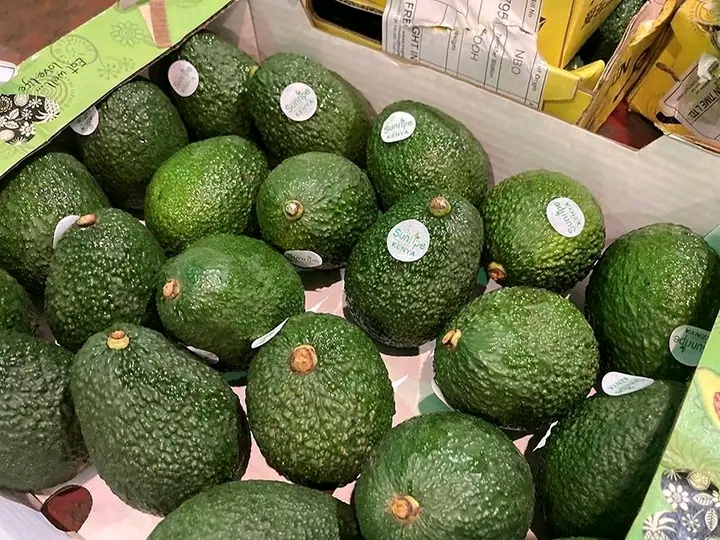
    Kenya is already recording measurable benefits from China’s decision to grant zero-tariff access to a wide range of African products, including key Kenyan agricultural exports.

    The policy, which took effect for most African countries in 2026, removes previous import duties that often ranged from 4 per cent to 25 per cent on items such as avocados, coffee, tea, macadamia nuts and horticultural produce.

    Official data for the period May to August 2026 show that Kenyan avocado exports to China rose by approximately 63 per cent in volume compared with the same months in 2025, reaching about 3.76 million kilogrammes. The value of those shipments increased by nearly 60 per cent. Unroasted green coffee performed even more strongly, with export volumes jumping by roughly 140 per cent and value nearly doubling over the same period.

    Agriculture and trade officials have described the early results as a positive signal for Kenyan farmers and exporters. They are encouraging producers to increase volumes, improve quality standards and move toward value-added products such as avocado oil and packaged coffee in order to capture more of the benefit.

    Partnerships between Kenyan and Chinese firms in processing and logistics are also being promoted.
    While the policy opens a large market of more than 1.4 billion consumers, success will depend on consistent supply, strict adherence to phytosanitary requirements, and competitive pricing.

    Government agencies continue to monitor the trade figures and support exporters seeking to expand their presence in China under the new duty-free arrangement.

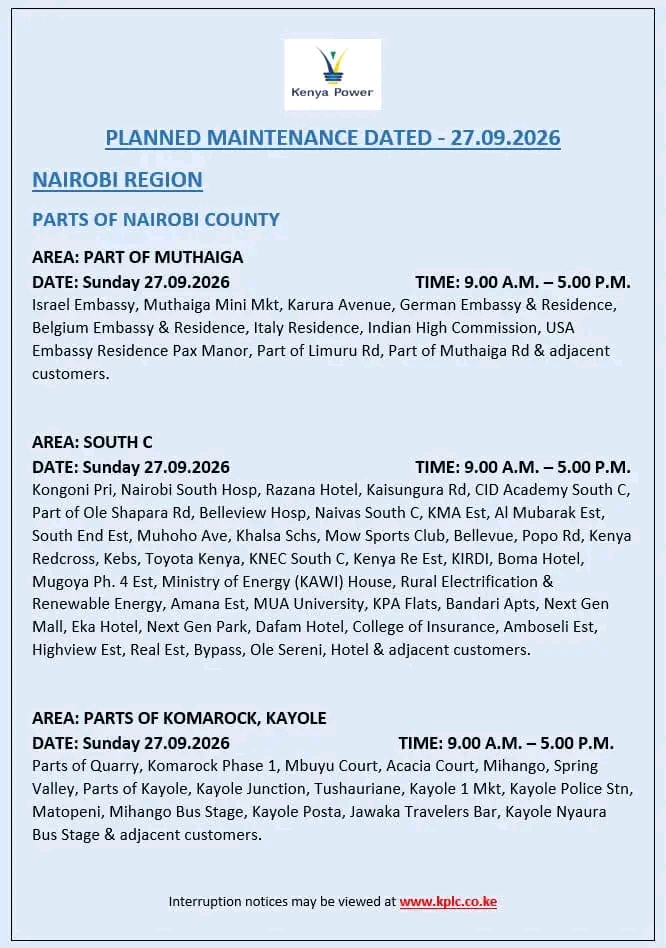
  • Kenya Power Announces Multi-County Electricity Outages for Monday, 28 September

    Kenya Power and Lighting Company (KPLC) has notified customers of planned electricity interruptions scheduled for Monday, 28 September 2026.

    The outages, lasting up to nine hours in some areas, will affect parts of six counties: Nairobi, Nyeri, Migori, Vihiga, Nandi and Kirinyaga. The works form part of routine network maintenance, upgrades, new connections and replacement of power lines.

    In Nairobi, the interruptions will mainly hit sections along Oloitoktok Road, Riara Road, parts of Gitanga Road, Argwings Kodhek Road, Ole Dume Road, Ngong Road and nearby estates such as Jamhuri. In Nyeri, areas including Muthinga, Gititu, Mung’aria and surrounding markets and institutions will be affected.

    Similar scheduled blackouts are planned for specific zones in the other listed counties.
    KPLC reminded customers that planned maintenance is necessary under electricity regulations to keep the network reliable and to connect new users.

    The company advised people to check the official MyPower app or earlier public notices for precise times and affected transformers. It also apologised in advance for any inconvenience the temporary loss of power may cause to homes and businesses.

    Residents and businesses in the listed areas are encouraged to make alternative arrangements for the day, especially for refrigerated goods, medical equipment and critical operations. Unplanned faults can still occur elsewhere, so customers are urged to report any unexpected outages through official channels.

    Courtesy:KPL Facebook

  • Four Artisanal Miners Die from Suffocation in Migori Gold Mine

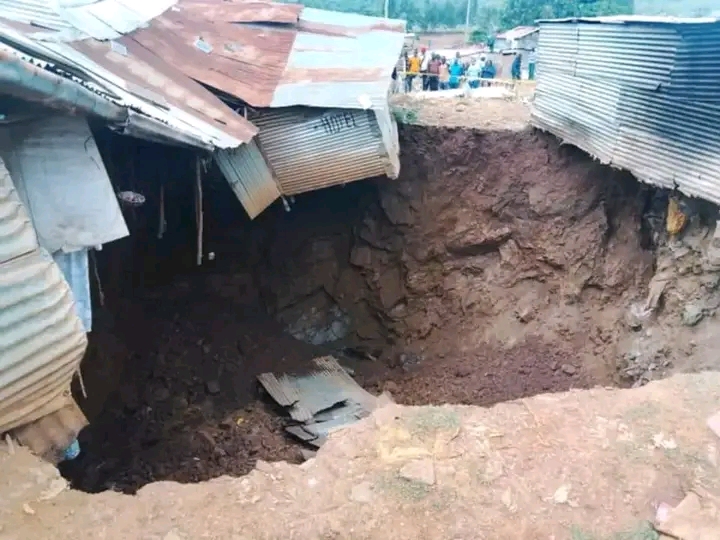
    Tragedy struck again in Kenya’s artisanal gold-mining sector when four miners died after suffocating inside an underground shaft in Ntunyigi, Kuria West, Migori County.

    The incident occurred on Saturday, 26 September 2026. Three workers had gone into the mine early in the morning; when they failed to return, the site owner, David Kinono Munanka, 41, entered the shaft to check on them and also did not come back.

    Police and members of the public later arrived and used a large compressor borrowed from the neighbourhood to pump oxygen into the hole. Rescuers were then able to enter and retrieve the four bodies. The deceased were identified as Munanka, Ian Gati Mwita (20), Samson Nyangige (37), and a young man known only as Peter, estimated to be 23 years old. The bodies were taken to Kehancha Sub-County Hospital mortuary pending post-mortem examinations.

    The deaths highlight the persistent dangers faced by artisanal and small-scale miners in Migori and similar counties. Many work in poorly ventilated, unregulated shafts with limited safety equipment. Similar accidents involving collapses, toxic gases and explosions have claimed lives in the region in recent months, prompting repeated calls for stricter regulation and better safety training.

    Local authorities and mining safety advocates continue to urge miners to observe waiting periods after blasting, use proper ventilation, and avoid entering shafts when conditions are unsafe. Investigations into the exact cause of the suffocation are ongoing.

    Migori gold mines

  • IEBC Strongly Denies Claims of Foreign Voter Registration and Missing Kits

    The Independent Electoral and Boundaries Commission (IEBC) has issued a firm public statement rejecting allegations of illegal foreign voter registration and missing election equipment. The claims, which gained traction after a television teaser suggested voter materials were being moved toward the Kenya-Uganda border, particularly around the Suam area in Trans Nzoia County, have been described by the commission as unsubstantiated and misleading.
    In its statement, the IEBC said no credible evidence has been submitted to support accusations that foreigners are being registered as Kenyan voters or that Kenya Integrated Elections Management System (KIEMS) kits have gone missing or been taken outside the country. The commission stressed that it only registers Kenyan citizens who already hold valid national identity cards or passports and that it has no role in issuing those documents.
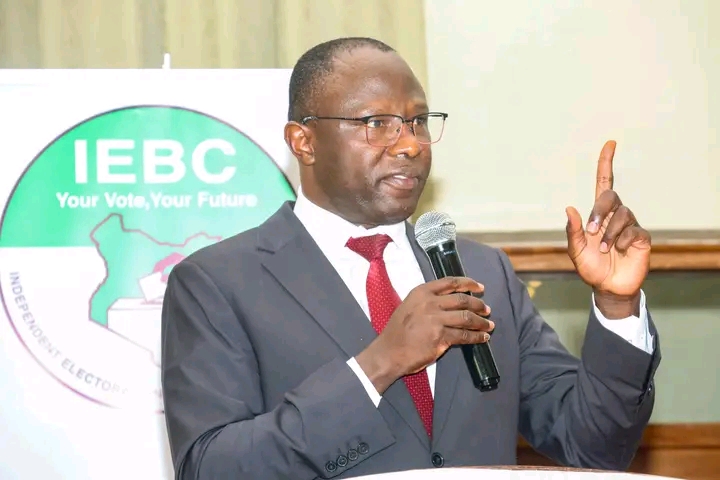
    IEBC Chairperson Erastus Ethekon and the commission warned that spreading false information about the electoral process risks undermining public confidence ahead of the 2027 general election. They invited anyone with genuine evidence of malpractice to present it for investigation and said appropriate legal action, including possible prosecution, would follow if wrongdoing is proven.
    The continuous voter registration exercise is ongoing across all 290 constituencies. The commission also reminded the public that Kenyans living abroad retain their constitutional right to register and vote, and that diaspora registration is being expanded in a controlled and legal manner.

    IEBC Chairman Erastus Ethekon