Author: Cyrus Munyao

  • CBK Accepts KSh8.96 Billion in Treasury Bond Switch Auction

    The Central Bank of Kenya (CBK) has accepted bids worth KSh8.96 billion in a Treasury bond switch auction involving a 15-year government security.The auction, dated October 7, 2026, involved the FXD1/2018/015 Treasury bond, which has a tenor of 15 years and approximately 6.6 years to maturity.

    The bond is due on May 9, 2033.According to the CBK auction results, the government had offered KSh10 billion worth of the bond but received total bids amounting to KSh9.08 billion, representing a 90.81 per cent performance rate.Of the bids received, CBK accepted KSh8.96383 billion. Competitive bids accounted for KSh7.04125 billion, while KSh1.92258 billion came through non-competitive bids.The auction recorded a bid-to-cover ratio of 1.01, indicating that the amount of bids received was only marginally higher than the amount on offer.The market-weighted average rate stood at 12.6126 per cent, while the weighted average rate of accepted bids was slightly lower at 12.6112 per cent.The bond was priced at 105.0721 per cent, against a coupon rate of 12.65 per cent.KSh8.78 billion switched from existing bondsAs part of the transaction, the CBK said KSh8.77915 billion was switched from the source bonds into the new destination security.The source securities were FXD1/2024/003, with a Kenya shilling face value of KSh6 billion, and FXD2/2013/015, with a face value of approximately KSh4 billion.The switch allows investors holding the specified existing government securities to exchange them for the new FXD1/2018/015 bond, helping the government manage its debt portfolio and maturity profile.The CBK also indicated that details of upcoming Treasury bond issues for October 2026, including their tenors, amounts and coupon rates, would be provided in the respective prospectuses before the issue dates.The auction results were signed by David Louisa, Director of Financial Markets, and dated October 5, 2026.

  • CBK Releases Daily Exchange Rates for October 6, 2026

    The Central Bank of Kenya (CBK) has published its daily foreign exchange rates for Tuesday, October 6, 2026, showing the Kenya shilling’s indicative value against major international and regional currencies.

    According to the CBK rates, the US dollar is trading at KSh129.79, while the British pound is quoted at KSh171.36. The euro stands at KSh145.25.

    The Japanese yen is listed at KSh82.06 per 100 yen.

    Among selected regional currencies, the Ugandan shilling is quoted at KSh31.00, while the Tanzanian shilling stands at KSh20.41. The Rwandan franc is trading at KSh11.35, while the South African rand is quoted at KSh7.78.

    CBK indicative rates for October 6

    CurrencyRate in Kenya shillings
    US Dollar (USD)129.79
    British Pound (GBP)171.36
    Euro (EUR)145.25
    Japanese Yen (100 JPY)82.06
    Ugandan Shilling (UGX)31.00
    Tanzanian Shilling (TZS)20.41
    Rwandan Franc (RWF)11.35
    South African Rand (ZAR)7.78

    The exchange rates provide an indicative benchmark for the value of the Kenya shilling against major global and regional currencies and are used as a reference by businesses, financial institutions and individuals involved in foreign-currency transactions.

    Source: Central Bank of Kenya.

  • Airtel Money Takes on M-Pesa in Kenya’s Growing Mobile Payments Battle

    NAIROBI, Kenya

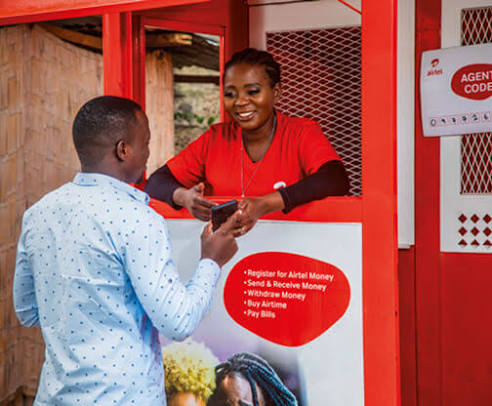
     Kenya’s mobile-money market is entering a more competitive phase as Airtel Money steps up its challenge to Safaricom’s M-Pesa with lower transaction fees and new products targeting small businesses.

    Safaricom remains the dominant player, controlling 88.8 percent of Kenya’s mobile-money subscriptions as of June 2026, compared with Airtel Money’s 11.1 percent.

    But Airtel has significantly increased its market share over the past three years, rising from just 2.8 percent in June 2023. 

    Airtel Money recently introduced Bizna Wallet, aimed at small traders, and offered the service without transaction fees as it seeks to attract merchants away from established competitors.

    The company has also reduced charges on several other transactions, including payments, bank transfers and transfers between mobile-money networks.

    Safaricom has responded by reducing some M-Pesa charges and increasing the threshold for fee-free transactions on its Pochi la Biashara service.

    The competition is significant because mobile money is a major source of revenue for Safaricom. In the financial year ended March 2026, M-Pesa revenue in Kenya rose 13.4 percent to Sh182.7 billion, accounting for 45.6 percent of Safaricom’s Kenyan revenue. 

    For consumers and small businesses, the emerging price competition could mean lower transaction costs and more choices.

    For the two telecommunications companies, however, the battle is increasingly about more than mobile transfers. Digital payments, merchant services, banking partnerships and financial technology are becoming key battlegrounds in Kenya’s rapidly evolving digital economy.


    Source: Business Daily Africa

    photo: Courtesy

  • US Overtakes Uganda as Kenya’s Top Export Market

    NAIROBI, Kenya.

    The United States has overtaken Uganda as Kenya’s leading export destination, highlighting a sharp recovery in Kenyan shipments to the American market following the restoration of preferential trade access under the African Growth and Opportunity Act (AGOA).

    Kenya’s exports to the US reached Sh63.59 billion between March and July 2026, nearly doubling from Sh32.51 billion during the same period last year, according to data from the Kenya Revenue Authority published by the Kenya National Bureau of Statistics.

    Uganda, meanwhile, imported Kenyan goods worth Sh60.54 billion during the five-month period.

    The surge in exports to the US has been driven largely by renewed demand for Kenyan apparel and agricultural products. American buyers resumed orders after AGOA preferences were restored, following months of uncertainty after the previous arrangement expired in September 2025. 

    Kenyan manufacturers have also benefited from the fact that several competing Asian apparel-producing countries have faced additional US tariffs, giving Kenyan exporters a cost advantage.

    The apparel sector remains particularly important, with Kenyan factories supplying international brands including H&M, Levi’s, JCPenney and Wrangler.

    The development comes as Washington has extended AGOA through December 2028, giving Kenyan manufacturers and investors a longer planning horizon.

    For Kenya, the growing US market could provide an important boost to foreign-exchange earnings, manufacturing employment and investment in export-oriented industries.

    However, the figures also underline the importance of Kenya diversifying its export base and maintaining preferential access to major international markets.

    SOURCE: Business Daily

  • Dangote Refinery Project Faces Fresh Legal Challenge in Kenya

    NAIROBI, Kenya

    Plans for a proposed $16 billion Dangote refinery project in Kenya have come under fresh scrutiny after a consumer-rights organisation filed a legal challenge over transparency surrounding the investment.

    Reuters reported on 2 October 2026 that the consumer group has challenged the project, raising concerns about the disclosure of important information relating to the proposed refinery.

    The development comes shortly after renewed attention on the proposed refinery project, which is expected to have significant implications for Kenya’s energy and industrial sectors if implemented.

    The project has also attracted attention over a proposed Kenyan stake. A report published on 2 October said the Consumers Federation of Kenya had petitioned the Public Private Partnerships Petition Committee over Kenya’s proposed 10 per cent stake, reportedly valued at approximately $500 million, or about Sh65 billion. The petition seeks clarification on how the stake would be financed and whether the funds have been budgeted, committed or already paid.

    The legal and transparency questions could become an important part of discussions surrounding the project’s financing, public participation and implementation.

    For Kenya’s business sector, the refinery is significant because of its potential implications for the country’s petroleum supply chain, industrial development and investment environment. However, the project’s eventual implementation will depend on regulatory, legal and financial processes.

    Photo:courtesy

  • Banks Increase Agricultural Lending by Sh53 Billion as Farm Credit Demand Grows

    NAIROBI, Kenya

    Commercial banks increased lending to Kenya’s agricultural sector by Sh53.1 billion in the year to June 2026, reflecting growing credit flows into one of the country’s key economic sectors.

    Data from the Central Bank of Kenya shows that agricultural credit increased by 35.1 per cent to Sh204.2 billion during the period. The growth was significantly higher than the 10.6 per cent increase in total private-sector credit, which expanded to Sh4.29 trillion.

    The increased lending comes as agriculture remains an important source of employment, household income and economic activity across the country. For banks, the expansion also represents an opportunity to grow lending in a sector traditionally considered relatively risky.

    Improved farm incomes and cash flows have contributed to the increased attractiveness of agriculture to lenders, according to reporting based on CBK data.

    The development could have implications for farmers and agribusinesses seeking financing for activities such as purchasing farm inputs, acquiring equipment, expanding production and improving value addition.

    Kenya’s broader economy also continues to receive significant support from agriculture. The Kenya National Bureau of Statistics reported that agriculture, forestry and fishing expanded by 3.1 per cent in 2025 and accounted for more than 20 per cent of the economy.

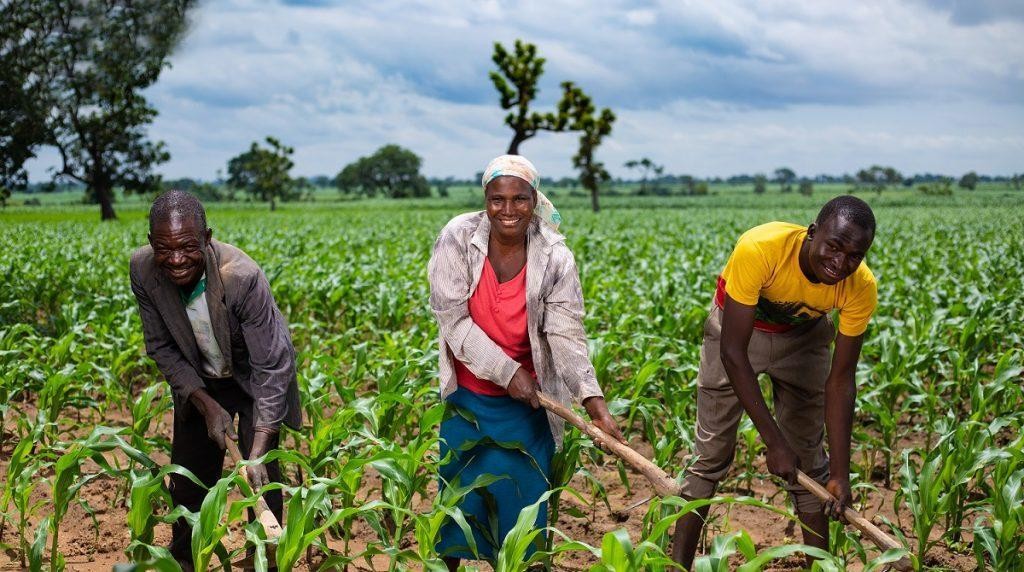
    In the photo, are Kenyan farmers working in a crop field.

  • Kenya Inflation Rises to 6.8% as Food Prices Put Pressure on Consumers

    NAIROBI, Kenya

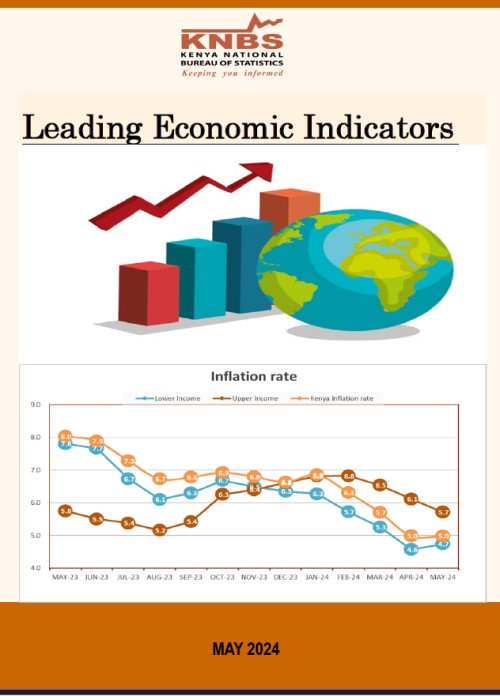
    Kenya’s annual inflation rate increased to 6.8 per cent in September 2026, up from 6.6 per cent in August, pointing to renewed pressure on household spending and business operating costs.

    According to the latest data reported from the Central Bank of Kenya (CBK), the increase was largely driven by higher core inflation, which rose to 4.0 per cent from 3.4 per cent. Processed food products, particularly milk and wheat products, were among the items contributing to the increase.

    The rise comes as businesses continue to operate in an environment of changing input costs. Higher prices can affect retailers, manufacturers, transport operators and other enterprises as businesses adjust their prices or absorb part of the additional costs.

    At the same time, non-core inflation, which includes volatile food and energy prices, eased to 14.0 per cent from 14.7 per cent, providing some relief in that category.

    The CBK has maintained the Central Bank Rate at 8.75 per cent, while its next Monetary Policy Committee meeting is scheduled for 7 October 2026.

    The inflation figures will therefore remain an important indicator for businesses and consumers as policymakers assess the direction of monetary policy and the cost of credit.

    Central Bank of Kenya headquarters in Nairobi.

  • Kenya inflation rises to 6.8% as food and transport costs squeeze consumers and businesses

    NAIROBI — October 2, 2026

    Kenya’s annual inflation rate climbed to 6.8% in September, up from 6.6% in August, as higher food and transport costs continued to put pressure on households and businesses.

    The latest figures from the Kenya National Bureau of Statistics (KNBS) show that the Consumer Price Index rose from 155.85 in August to 156.47 in September, equivalent to a 0.4% monthly increase. 

    Three categories accounted for much of the pressure: food and non-alcoholic beverages, transport, and housing, water, electricity, gas and other fuels. Together, the categories account for more than 57% of the weight in Kenya’s 13 major expenditure groups. 

    Food and non-alcoholic beverages recorded annual inflation of 9.5%, while transport prices were up 15.6% year-on-year. Housing, water, electricity, gas and other fuels rose 3.2%. K

    Food costs remain a major pressure point

    The September figures show that inflation is not affecting every product equally.

    Fresh packeted milk rose by 6% during the month, while UHT milk increased by 8%. White wheat flour rose 4.5%, cabbage prices climbed 6.2% and potatoes increased 3.3%.

    Other products moved in the opposite direction. Tomatoes fell 4.1%, while sugar declined 0.4%. Electricity prices also fell during the month according to the KNBS consumer-price measure. P

    Transport remains particularly significant for companies because fuel and logistics costs feed into the prices of goods and services throughout the economy.

    KNBS recorded annual transport inflation of 15.6%. Diesel was priced at an average of KSh219.04 per litre, 26.9% higher than a year earlier, while petrol averaged KSh214.95 per litre, up 15.8% year-on-year. 

    For manufacturers, retailers, restaurants, distributors and transport operators, higher logistics costs can put pressure on margins or force businesses to pass some costs on to customers.

    The headline 6.8% figure also conceals an important divergence within the inflation basket.

    KNBS reported core inflation of 4.0%, up from 3.4% in August, while non-core inflation stood at 14.0%. Food and non-alcoholic beverages contributed 2.8 percentage points to headline inflation, while transport contributed 1.6 percentage points. 

    The data provide a mixed picture for businesses. On one hand, some costs—including selected food items and electricity—have eased. On the other, transport and several everyday food products remain significantly more expensive than a year ago.

    For consumers, that combination can influence spending decisions. For businesses, it complicates pricing, wage negotiations, inventory planning and forecasts for consumer demand.

    Kenya’s September inflation release will therefore be closely watched by companies and financial institutions as they assess the final quarter of 2026.

  • Anthropic’s IPO filing exposes huge AI spending, rapid growth and a new model of tech financing

    SAN FRANCISCO — October 2, 2026

    Artificial-intelligence company Anthropic has given investors an unusually detailed look at the economics behind frontier AI, revealing a business growing at extraordinary speed while simultaneously committing enormous sums to computing infrastructure.

    The company’s IPO prospectus, reviewed by Reuters, showed that Anthropic generated nearly $4.6 billion in revenue in 2025, roughly twelve times its revenue a year earlier. But the company also reported a $42 billion net loss, with approximately $34 billion of that figure stemming from accounting charges related to financing instruments that could ultimately convert into equity. 

    The more revealing figure for operating economics was an $8.06 billion operating loss. Anthropic spent $12.65 billion on operating expenses, with computing and infrastructure accounting for more than half of that amount. 

    The disclosures illustrate one of the central challenges facing the AI industry: developing and operating increasingly powerful models requires vast amounts of computing capacity, while companies must simultaneously turn that capacity into recurring commercial revenue.

    Broadcom enters the financing equation

    The scale of the infrastructure build-out became even clearer this week when Anthropic’s filing revealed an agreement under which semiconductor company Broadcom could lend the AI company up to $42 billion to finance infrastructure spending.

    The financing is linked to Anthropic’s plans to lease computing capacity based on Broadcom-designed chips. Reuters reported that Anthropic expects to become Broadcom’s largest customer in its chip-design business in 2027. 

    That arrangement illustrates how the AI boom is creating increasingly complicated relationships between model developers, cloud providers, chip companies and financiers.

    Anthropic already relies heavily on technology giants such as Amazon and Google for computing infrastructure and distribution. Reuters reported that 47% of Anthropic’s sales in 2025 were routed through Amazon and Google’s cloud platforms, highlighting the company’s dependence on businesses that are simultaneously partners, investors or competitors in different parts of the AI ecosystem. 

    The prospectus has reportedly outlined a path toward a valuation potentially exceeding $2 trillion, although an eventual valuation and timing would depend on market conditions and the company’s eventual offering.

    The IPO therefore represents more than a conventional technology listing. It could provide public-market investors with one of the clearest tests yet of how financial markets value an AI company whose revenue is growing rapidly but whose infrastructure requirements are also extraordinary.

    Anthropic’s filing also contains extensive risk disclosures concerning advanced AI, including warnings about potential severe risks from increasingly capable systems. 

    For the wider technology industry, the financial question is becoming increasingly important: how much computing infrastructure can AI companies economically absorb, and how quickly can revenue growth catch up with the cost of building it?

    Business takeaway: Anthropic’s disclosures demonstrate that the next phase of the AI race is not simply about software models. It is also about financing chips, data centres and computing capacity on an unprecedented scale.

  • Global Bond Sell-Off Puts Borrowing Costs Back at the Centre of Business Risk

    Load iGlobal bond turmoil pushes borrowing costs higher as markets await U.S. jobs data

    NEW YORK/LONDON — October 2, 2026

    A sharp sell-off in government bonds is forcing investors and businesses to reassess the cost of money after U.S. Treasury yields climbed to their highest levels in more than two decades, adding pressure to financial markets around the world.

    The benchmark 10-year U.S. Treasury yield briefly reached 5.34% on Thursday, its highest level since 2002, before retreating as buyers returned to the market. The move followed a sustained rise in long-term yields that has made borrowing more expensive for governments, companies and households. 

    U.S. stocks nevertheless recovered on Thursday. The S&P 500 gained about 0.2%, while the Dow Jones Industrial Average and Nasdaq also ended modestly higher after an earlier sell-off. 

    The bond-market volatility has been driven by several overlapping concerns. Inflation remains above central-bank comfort levels, energy prices have risen, and investors are demanding greater compensation for holding long-term government debt. Government borrowing requirements are also adding to the supply of bonds coming to market. 

    Higher government bond yields tend to raise the benchmark cost of capital throughout the economy.

    For businesses, that can mean higher interest expenses on loans, more expensive corporate-bond issuance and greater hurdles for investment projects. Property developers and other highly leveraged industries are particularly sensitive to changes in long-term borrowing costs.

    The pressure is not confined to the United States. Government bond yields have also risen sharply in major economies including Germany and Japan, while European markets have been affected by concerns about fiscal policy and debt levels. 

    At the same time, investors are trying to determine how much further the U.S. Federal Reserve may raise interest rates. Recent comments from Fed officials have moderated some expectations for an immediate October increase, although policymakers remain concerned about inflation and the strength of economic activity. R

    The next major data point is the U.S. employment report due Friday. Markets will be watching payroll growth, unemployment and wage developments for clues about the economy and the direction of monetary policy.

    The combination of elevated yields, volatile energy prices and uncertain interest-rate expectations means businesses entering the final quarter of 2026 face a financial environment in which the cost of capital remains a central strategic consideration.