Blog

  • New Road Project Improves Access for Residents in Western Kenya By Delson Visaho

    A newly completed section of the Kisumu–Busia highway has significantly reduced travel time for traders and residents in western Kenya.

    The 45-kilometre stretch, upgraded under a national infrastructure program, features dual carriageways, improved drainage, and street lighting in key market towns. Local business owners said the smoother road surface has already lowered vehicle maintenance costs and improved the delivery of perishable goods.

    County officials in both Kisumu and Busia noted a sharp drop in reported accidents along the route since the upgrade was opened to traffic last month. Pedestrian walkways and designated bus bays were included in the design to enhance safety for daily commuters. Farmers transporting produce to regional markets reported that journey times have been cut by nearly an hour in some cases.
    The project also created temporary employment for hundreds of local workers during construction.

    Community leaders praised the inclusion of roadside amenities such as rest stops and emergency service points. Engineers confirmed that the road was built to withstand heavy rains common in the region.

    Further sections of the corridor are scheduled for upgrading in the coming financial year. Residents expressed hope that the improved connectivity will attract more investment and support growth in agriculture and small-scale trade across the border counties.


  • Nairobi Schools Launch Digital Learning Program for Underserved Students By Delson Visaho

    Primary and secondary schools in several informal settlements across Nairobi have started rolling out a new digital learning initiative aimed at bridging the technology gap.

    The program, supported by the Ministry of Education and private partners, has already distributed tablets and solar-powered charging stations to more than 40 schools in areas including Kibera, Mathare, and Mukuru. Teachers received specialized training to integrate the devices into daily lessons.
    Students are now able to access interactive lessons in mathematics, science, and English even during power outages, thanks to the solar units.

    School heads reported improved attendance and engagement in the first month of implementation. Parents in the targeted communities welcomed the move, saying it gives their children a fairer chance to compete with peers in better-resourced schools.

    Education officials emphasized that the tablets come pre-loaded with the national curriculum and offline content to avoid heavy data costs.

    Monitoring teams will visit participating schools every term to assess progress and address technical challenges. Early feedback from teachers indicates that learners who previously struggled with textbooks are responding positively to the visual and interactive materials.

    The county education board plans to expand the program to additional schools in the next academic year if the pilot continues to show strong results. Stakeholders stressed that sustained teacher support and device maintenance will be critical to long-term success.

  • Farmers in Nakuru Embrace Drought-Resistant Crops Amid Changing Weather Patterns By Delson Visaho

    Farmers across Nakuru County have begun shifting to drought-resistant crop varieties as prolonged dry spells continue to challenge traditional farming methods.

    County agricultural officers reported that more than 12,000 smallholder farmers have already received certified seeds of drought-tolerant maize and beans through a partnership between the national government and local cooperatives. The initiative aims to protect food security in one of Kenya’s key grain-producing regions.

    Extension officers have been conducting field demonstrations in areas such as Njoro and Molo, teaching farmers improved water-conservation techniques and soil management practices.

    Many participants said the new varieties have shown stronger performance during the short rains compared with older seed stocks. Local leaders expressed hope that the program will reduce reliance on emergency food aid in future dry seasons.

    The county government has also linked the seed distribution drive to access to affordable micro-loans for irrigation equipment.

    Several farmer groups in Bahati have already installed small-scale drip systems using the support. Officials noted that early results from pilot plots indicate higher yields even under limited rainfall conditions.
    Community meetings scheduled for the coming weeks will expand the training to more wards.

    Agricultural experts caution that long-term success will depend on consistent rainfall monitoring and continued investment in climate-smart farming. Residents say the program has restored optimism after consecutive seasons of reduced harvests.

  • MORE NURSES COULD END ER CROWDING.

    By.philes isaboke

    Emergency departments could treat thousands more patients and reduce dangerous waiting times simply by hiring more bedside nurses, according to a major new study published today.

    Medical Care, analyzed 410 hospitals in the United States and modeled the impact of improving nurse staffing levels. The findings were striking.

    Researchers projected that funding more positions for bedside nurses would be associated with over 5,000 additional patients being treated because emergency department stays would become shorter and beds would turn over faster. It would also result in over 250 fewer patients leaving the emergency room without being seen, a known risk factor

    Hospitals can create more funded positions for bedside nurses to alleviate chronic understaffing conditions and solve long wait times in emergency departments. Our study emphasizes that safe nurse staffing matters to move the needle on safer, timelier care for the public.”

    Emergency department crowding is a global crisis linked to staff shortages, burnout, an aging population, and limited inpatient beds. Crowding leads to treatment delays, increased medical errors, longer pain and suffering, and higher mortality.

    For years, hospitals have tried to solve crowding with hallway beds and faster triage, but this study suggests the root solution is staffing. Nurses are responsible for assessments, medications, documentation, and patient flow. When they are stretched too thin, the entire department stalls.

    Health policy experts say the findings should push policymakers and hospital administrators to invest in recruitment and retention of nurses rather than short-term fixes.

  • KENYA CONFIRMS SECOND EBOLA CASE, 108 CONTACTS IN QUARANTINE

    By.philes isaboke

    The Ministry of Health has confirmed a second case of Ebola in Kenya, just over a week after the country recorded its first-ever infection.

    Health Director General Dr. Patrick Amoth announced today that the patient is a 39-year-old man who is a close family member of the first patient. He was already under mandatory 21-day quarantine as a known contact when he fell ill.

    According to the Ministry, the man developed symptoms including fever, unusual fatigue, and joint pains on Tuesday, October 13. The quarantine team immediately isolated him and collected samples for testing. Results from both the National Virology Reference Laboratory and the Kenya Medical Research Institute-CDC (KEMRI-CDC) laboratories returned positive for Ebola Bundibugyo virus.

    The patient has been transferred to a designated Ebola Treatment Centre where he is receiving supportive care. Officials say his condition is being closely monitored.

    Kenya’s first case involved a Kenyan man who had lived in the Democratic Republic of Congo for several years. He traveled back to Nairobi while ill, was isolated at The Nairobi Hospital, and died on October 5. The Bundibugyo strain was confirmed on October 6.

    Contact tracing has intensified. The Ministry said 128 contacts were identified from the first case. By October 13, 113 had been traced, with 108 placed in quarantine for 21 days with daily temperature and symptom checks. Five contacts are outside Kenya and authorities in those countries have been notified.

    WHO has been formally notified under International Health Regulations. No travel, trade, or public gathering restrictions have been imposed. The public is urged to call toll-free line 719 and avoid misinformation.

  • HAVING SOMEONE TO TALK TO LINKED TO BETTER MENTAL HEALTH AMONG TEENS

    By. philes isaboke

    Adolescents who have at least one supportive adult they can confide in have significantly better mental health, according to a new peer-reviewed study published in JAMA Pediatrics.

    The study, titled “Support Seeking and Mental Health Risk by Sexual Identity Among US Adolescents,” analyzed data from thousands of American teens. Researchers found a strong link between having a trusted person to talk to and lower rates of anxiety, depression, and suicidal thoughts.

    The findings are particularly relevant for vulnerable youth. The study found that while peers and friends offer some support, they do not fully replace the protective effect of a consistent, supportive adult, such as a parent, teacher, school counselor, or mentor.

    Researchers also examined the role of schools. Schools where staff were perceived as supportive and caring were associated with a measurable reduction in suicide risk among students. This was true regardless of the student’s background.

    The research comes at a time when teen mental health has been a growing national concern. The US Centers for Disease Control and Prevention (CDC) recently reported signs of improvement in adolescent mental health for the first time in a decade. Experts have credited part of that improvement to expanded school-based mental health programs that intentionally connect students with trusted adults.

    The authors recommend that parents, schools, and communities prioritize creating safe spaces where teenagers feel comfortable seeking help. They suggest that simple interventions, like regular check-ins and training teachers to recognize distress, can make a life-saving difference.

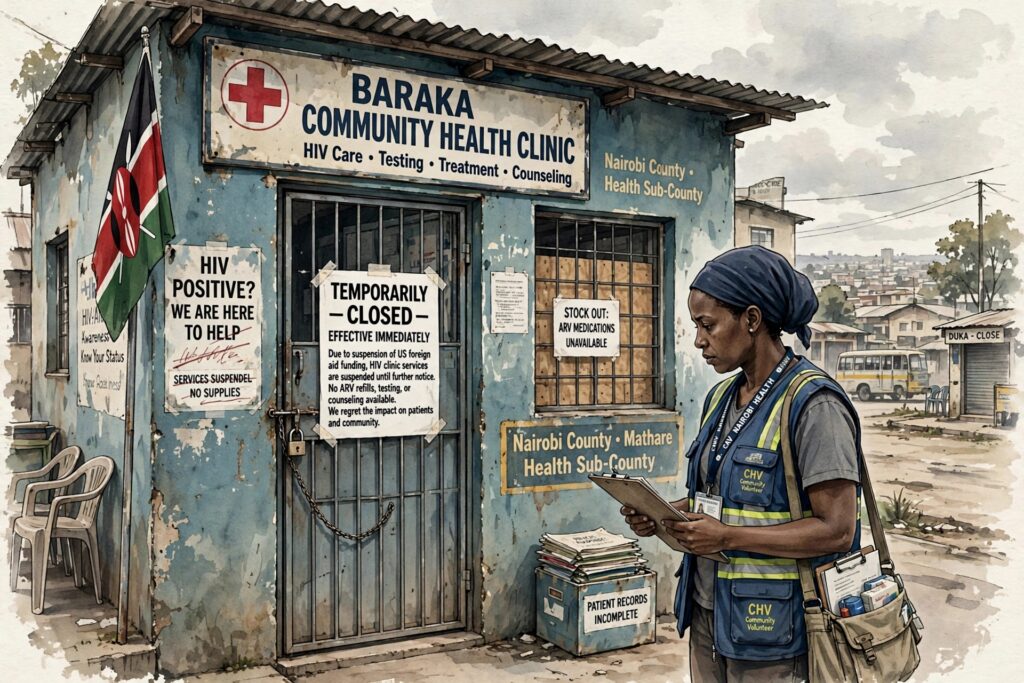
  • US AID CUTS ARE KILLING KENYAN PATIENTS – AFP CONFIRMS DEATHS

    by . philes isaboke

    HIV-positive sex workers in Kenya have died after being cut off from life-saving medication following drastic cuts to US foreign aid, an investigation by Agence France-Presse (AFP) has confirmed.

    The women, who were previously healthy and on regular antiretroviral treatment, lost access to care when their dedicated clinics closed in early 2025 after US funding was withdrawn. Health workers on the ground confirmed the deaths to AFP, warning the number could rise.

    For years, Kenya operated dozens of specialized, peer-led clinics that provided HIV treatment, condoms, testing, and counseling specifically for sex workers, a key population at high risk of infection. Most of those clinics have now shut down.

    A July 2026 report by the Foundation for AIDS Research (amFAR) documented the scale of the disruption, finding that 73% of US-funded organizations serving key populations had been forced to end or severely reduce services. The report linked the closures directly to the US aid cuts announced in January 2025.

    The Joint United Nations Programme on HIV/AIDS (UNAIDS) has raised the alarm. Executive Director Winnie Byanyima described the situation as “the most serious disruption in the HIV response since the world came together to fight this disease.”

    Public health experts warn that interrupting antiretroviral therapy not only endangers individual patients but risks increased transmission and drug resistance. Frontline workers in Nairobi report patients returning to sex work without condoms or medication, unable to afford private care.

    The Ministry of Health has not yet commented on plans to fill the funding gap.

  • Kenya’s Budget Deficit Projected to Rise to 5.9% in 2027/28

    NAIROBI, Kenya — 14 October 2026

    Kenya’s budget deficit is projected to increase to 5.9 per cent of gross domestic product in the 2027/28 financial year, according to projections announced by the National Treasury.

    A Reuters report published on 9 October indicated that the projected deficit would rise from 5.5 per cent of GDP in the 2026/27 financial year.

    Photo: Courtesy

    The increase highlights the continuing challenges facing the government’s efforts to balance public spending, revenue collection and the country’s financing needs.

    A budget deficit occurs when government expenditure exceeds the revenue collected through taxes, fees and other sources. Governments may finance the shortfall through borrowing or other financing arrangements.

    For Kenya, fiscal decisions have significant implications for public infrastructure, healthcare, education, agricultural programmes and other essential services.

    The projected increase also places renewed attention on how the government manages public debt and raises revenue while meeting its development commitments.

    However, the deficit projection alone does not establish how individual taxes, government services or household costs will change. Those outcomes depend on subsequent policy decisions and the details of government financing plans.

  •  Kenya Steps Up Fight Against Doping Ahead of 2029 World Athletics Championships

    Kenya’s efforts to combat doping in athletics have received international recognition as the country prepares to host the 2029 World Athletics Championships.

    World Athletics President Sebastian Coe acknowledged the progress made by Kenya in addressing doping, highlighting improvements in testing, government support and the country’s athletics integrity structures.

    Photo: Courtesy

    Speaking in Nairobi on Wednesday, Coe said the fight against doping has become more sophisticated over the years, with testing increasingly guided by intelligence and targeted investigations.

    Kenya has faced persistent challenges involving athletes who have violated anti-doping rules. Reuters reported that more than 140 Kenyan athletes had been sanctioned since the establishment of the Athletics Integrity Unit in 2017.

    Despite the progress, the athletics community continues to face the challenge of preventing prohibited substances from undermining fair competition.

    Kenya’s preparations for the 2029 championships offer an opportunity to demonstrate improvements in athlete education, testing procedures and enforcement of anti-doping regulations.

    Hosting the competition will also bring international attention to the country’s athletics infrastructure and its reputation as one of the world’s leading producers of distance-running talent.

  •  Kenya Confirms Second Ebola Case as Health Authorities Intensify Surveillance

    NAIROBI, Kenya 14 October 2026

    Kenya has confirmed a second case of Ebola, raising concerns about the potential spread of the disease and prompting renewed attention to public health surveillance and contact tracing.

    According to a report published by Reuters on Wednesday, the second patient is a 39-year-old man who is a close relative of the first confirmed patient. He had already been placed in quarantine before developing symptoms on 13 October.

    Photo: Courtesy

    Kenya confirmed its first imported Ebola case earlier this month after a Kenyan national who had been living in the Democratic Republic of Congo travelled through Uganda to Nairobi. The patient subsequently died after being hospitalised.

    The latest case underscores the importance of identifying potentially infected individuals, monitoring contacts and strengthening screening procedures at points of entry.

    Kenyan health authorities have been working to contain the risk of further transmission through surveillance, quarantine and coordination with international health agencies.

    The developments also highlight the challenges of managing infectious diseases across borders, particularly when people travel between countries experiencing active outbreaks.