By Hadrine Joyce | Monday, 12 October 2026
The Kenya Revenue Authority (KRA) recorded a KSh58.2 billion shortfall against its ordinary revenue target during the first quarter of the 2026/2027 financial year, according to figures reported from the National Treasury.
The authority collected KSh655.8 billion in ordinary revenue during the three months to September 2026, representing a 14.4 per cent increase from the KSh573.5 billion collected during the same period in 2025.
Despite the year-on-year growth, collections remained below the government’s target. The National Treasury reported that overall revenue collection was KSh40.4 billion below target by the end of September, partly because ministerial appropriations-in-aid exceeded their target by KSh17.8 billion.
Income tax recorded the largest shortfall among the main revenue categories, with KSh297.9 billion collected against a target of KSh323.3 billion. Excise duty also fell short of its target by KSh16.3 billion.
The revenue gap comes as the government faces pressure to finance public expenditure. The shortfall could increase the need for additional borrowing if the government cannot close the gap through stronger revenue collection or spending adjustments.
The Treasury has identified measures such as broadening the tax base, simplifying tax laws and improving the collection of non-tax revenue as part of efforts to strengthen government finances.
Source: Business Daily Africa, reporting on National Treasury figures.
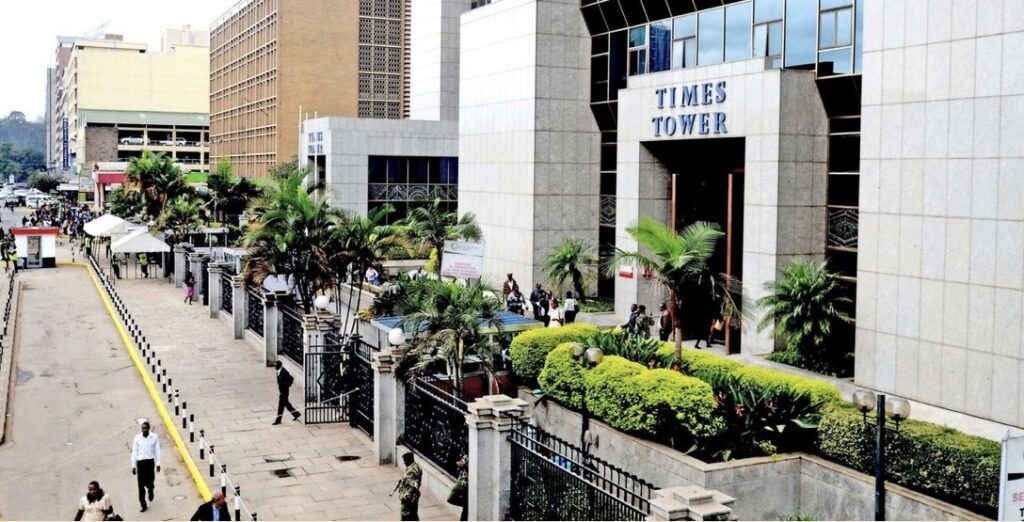
Photo caption: The Kenya Revenue Authority headquarters at Times Tower in Nairobi.
Photo credit: File|Nation Media Group