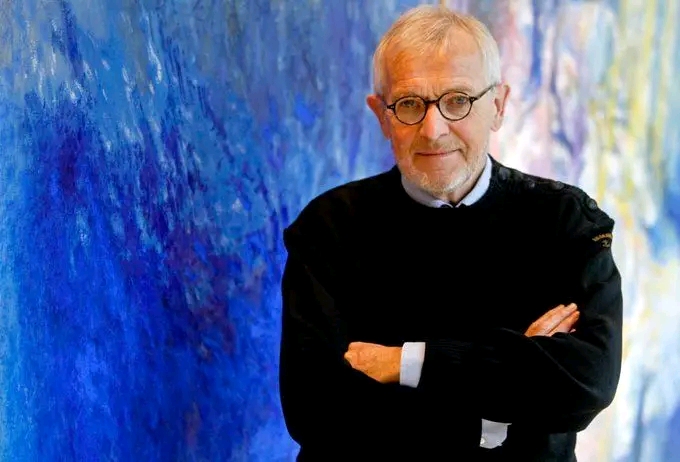
Belgian-American physicist Francis Halzen has been awarded the 2026 Nobel Prize in Physics for his pioneering work on the IceCube Neutrino Observatory in Antarctica. The Royal Swedish Academy of Sciences announced the honour on Tuesday, praising his decisive contributions to detecting high-energy neutrinos from deep space.
Halzen, a professor at the University of Wisconsin–Madison, first proposed using the clear Antarctic ice as a giant detector in 1988. The IceCube project, completed in 2011, embeds thousands of light sensors in a cubic kilometre of ice to capture the rare flashes produced when neutrinos interact with matter.
These “ghost particles” travel vast distances across the universe without being deflected, carrying unique information about the most violent cosmic events. The observatory has already detected neutrinos originating far beyond our solar system and even from within the Milky Way.
At 82, Halzen described the award as a great surprise and credited the international team of scientists and engineers who helped turn his vision into reality. The prize includes 12 million Swedish kronor and highlights a major advance in a new form of astronomy.
Leave a Reply